

As autumn arrives, your front porch becomes the perfect canvas for showcasing the season's rich textures and warm colors through creative planter arrangements. Whether you have a spacious covered porch or a small entryway, the right combination of containers, plants, and seasonal elements can transform your home's entrance into a stunning fall display. These ten fall planter ideas offer distinctly different approaches to creating memorable front porch displays that welcome visitors with seasonal charm.
Tiered Galvanized Bucket Display with Cascading Ornamental Kale
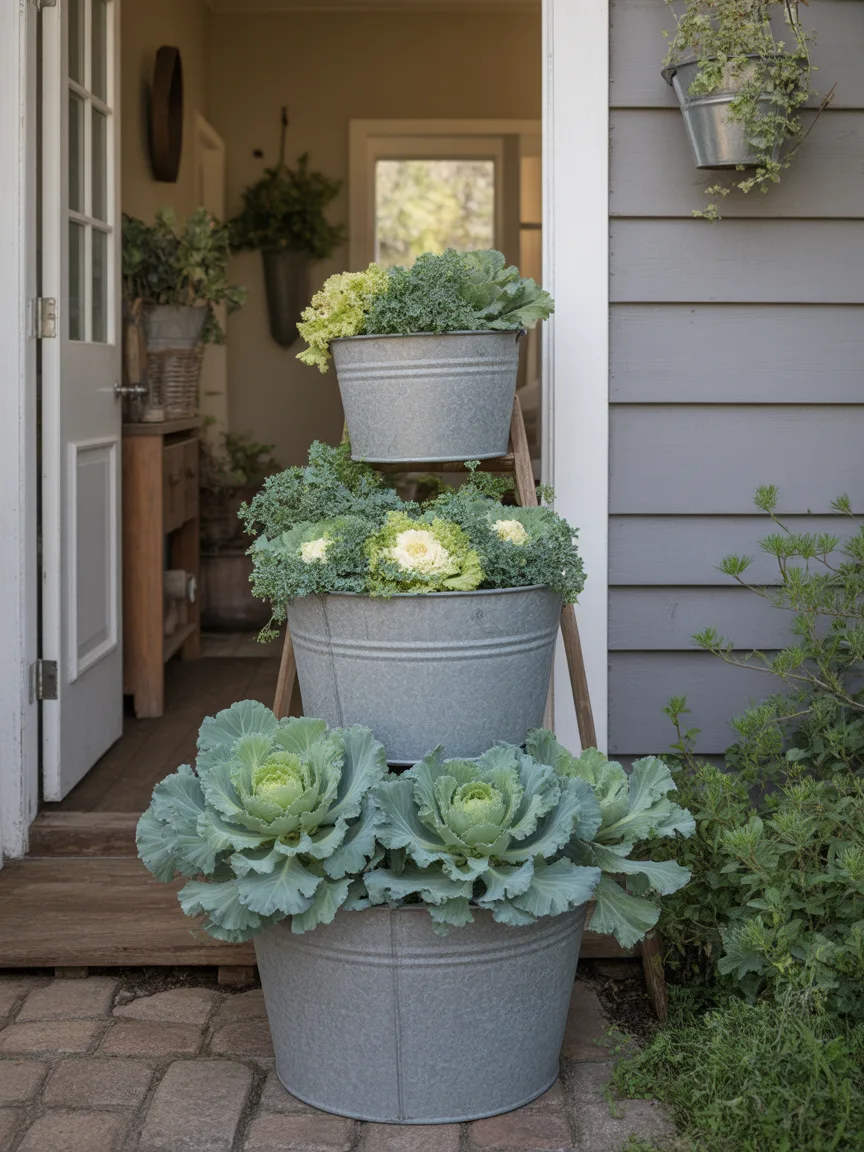
Create a vertical focal point by stacking three different-sized galvanized metal buckets on weathered wooden crates beside your front door. Fill the top bucket with deep purple ornamental kale, the middle tier with trailing variegated ivy that spills over the edges, and the bottom bucket with a mix of dusty miller and purple fountain grass. The silvery-gray tones of the galvanized metal and dusty miller create a sophisticated contrast against the rich purple foliage, while the varied heights draw the eye upward and make excellent use of limited porch space.
- Container arrangement: Use crates of varying heights (12", 8", and 4") to create intentional elevation differences that prevent the display from looking too uniform or stacked.
- Plant positioning: Place the ornamental kale center-stage in the top bucket where its rosette pattern becomes the focal point, then allow the ivy to soften the edges naturally.
- Finishing detail: Tuck small gourds or mini white pumpkins around the base of each crate to anchor the display and tie it visually to the porch floor.
Vintage Wheelbarrow Garden Filled with Mixed Chrysanthemums

Position a rustic wooden wheelbarrow at an angle on your porch and fill it with a dense planting of chrysanthemums in graduating autumn shades—deep burgundy at the back, burnt orange in the middle, and golden yellow toward the front. Line the wheelbarrow with landscape fabric before adding potting soil to ensure proper drainage, then plant the mums directly in the wheelbarrow rather than keeping them in individual pots. This approach to farmhouse-style fall displays creates an authentic garden-to-porch feel that looks established and intentional rather than simply arranged.
- Color progression: Arrange the darkest mums toward the wheelbarrow's back edge to create depth, with lighter shades cascading forward to catch natural light.
- Wheelbarrow selection: Choose one with visible wood grain, chipped paint, or gentle weathering rather than a pristine replica—authenticity matters for this look.
- Placement strategy: Angle the wheelbarrow slightly toward your front door so the "spill" of flowers appears to be rolling toward visitors as they approach.
Tall Urn Planters with Fountain Grass and Trailing Sedum

Flank your front door with two substantial stone or concrete urns (at least 20 inches tall) and fill each with a dramatic purple fountain grass as the centerpiece, surrounded by trailing sedum 'Angelina' that drapes over the urn's edges in golden-chartreuse cascades. Add several burgundy coral bells at the base to create color depth at the soil level. This combination emphasizes texture and movement rather than relying on typical fall flowers, making it perfect for those seeking elegant rather than overtly seasonal displays. The ornamental grasses add height and visual interest that creates sophisticated porch styling throughout the season.
- Urn placement: Position urns 18-24 inches from the door frame to create generous symmetry without crowding the entryway or blocking the door swing.
- Plant proportion: The fountain grass should reach approximately twice the height of the urn itself to create proper visual balance and drama.
- Maintenance advantage: These plant combinations require minimal deadheading or care and actually improve in appearance as temperatures cool and frost touches the foliage.
Wooden Crate Herb Garden Arrangement with Rosemary Topiaries

Transform a shallow wooden produce crate into a functional and fragrant fall planter by filling it with a collection of upright rosemary plants trimmed into small topiary shapes, interspersed with trailing thyme and compact sage varieties. Place the crate on a sturdy plant stand or small table near your front door where visitors can catch the herbal fragrance as they pass. The silvery-green and deep green tones create a more subtle, European-inspired fall aesthetic that doesn't rely on bright colors or obvious autumn symbols, perfect for those who prefer understated seasonal transitions.
- Herb selection: Choose woody herbs that tolerate cooler temperatures well—rosemary, thyme, and sage thrive in fall conditions and can be harvested for cooking.
- Crate preparation: Drill additional drainage holes in the crate bottom and line with burlap or landscape fabric to prevent soil loss while allowing water to escape.
- Display elevation: Raising the crate on a stand brings the herbs to nose-height where their fragrance can be appreciated and makes the display feel more intentional than ground-level arrangements.
Copper Washtub Planter with White Pumpkins and Eucalyptus

Use a large copper or copper-finished metal washtub as your container and create a monochromatic display using only white, cream, and silvery-green elements. Nestle several white pumpkins of varying sizes into a bed of fresh or preserved eucalyptus branches, adding white flowering kale and silvery lamb's ear plants between the pumpkins. The metallic copper container provides all the warm autumn color needed, while the cool-toned planting creates an unexpected, sophisticated contrast. Position this arrangement on the porch floor beside a rocking chair or bench to create a cozy conversation area.
- Pumpkin integration: Place pumpkins directly on the soil surface and tuck plants around them rather than balancing pumpkins on top of plants—this creates stability and a more natural appearance.
- Eucalyptus use: Fresh eucalyptus will gradually dry in the arrangement, maintaining its appearance throughout the season and releasing subtle fragrance.
- Container finish: If using a new copper-finish tub, consider leaving it outdoors for several weeks before planting to allow natural patina development for more authentic character.
Hanging Basket Trio with Calibrachoa and Creeping Jenny

Install three hanging baskets at staggered heights along your porch ceiling or from shepherd's hooks, filling them with rust-colored calibrachoa (million bells), trailing golden creeping jenny, and deep purple violas for continuous fall bloom. This vertical approach maximizes planter impact without consuming valuable porch floor space, making it ideal for narrow porches or small entryways. The cascading plants create living curtains of color that frame your doorway from above, and the different hanging heights prevent the display from looking too uniform or regimented.
- Height variation: Hang baskets at 7 feet, 5.5 feet, and 4 feet respectively to create an intentional cascade effect that guides the eye downward toward your door.
- Basket positioning: Space baskets 24-30 inches apart horizontally to allow each one to be appreciated individually while still creating a unified display.
- Bloom maintenance: Calibrachoa and violas benefit from regular deadheading to maintain blooms through October, while creeping jenny requires no maintenance and provides reliable golden color.
Terra Cotta Pot Cluster with Switchgrass and Sedum Groundcover

Group five to seven unglazed terra cotta pots in varying sizes (from 8-inch to 16-inch diameter) in one corner of your porch, creating an asymmetrical cluster arrangement. Plant tall switchgrass in the largest pots, medium-sized red-twig dogwood stems in mid-sized pots, and low-growing autumn sedum varieties in the smallest containers. The natural terra cotta color unifies the diverse plant material while the varied pot sizes create visual rhythm. This approach embraces natural element styling that feels organic rather than overly designed.
- Clustering technique: Place the largest pot slightly back and to one side, then arrange smaller pots in front and around it, allowing approximately 2-4 inches between containers.
- Plant height ratio: The tallest switchgrass should reach about three times the height of its container to create proper drama and prevent the display from looking squat.
- Saucer consideration: Skip matching saucers under the pots—the slight water staining on porch boards or the need to water carefully becomes part of the authentic gardener aesthetic.
Window Box Transformation with Ornamental Cabbage and Pansies

If your porch includes a window or railing, install a substantial window box (at least 8 inches deep) and fill it with alternating ornamental cabbages in cream and purple tones, interspersed with cold-hardy pansies in complementary jewel tones. Add trailing English ivy at regular intervals to soften the box edges. The linear arrangement creates rhythm through repetition while the varied textures—ruffled cabbage, delicate pansy petals, and glossy ivy leaves—prevent monotony. This elevated planter draws attention to architectural features and works especially well for porches where floor space is limited but vertical surfaces are available.
- Planting pattern: Use a cabbage-pansy-ivy-cabbage-pansy-ivy pattern for boxes up to 36 inches, or repeat the pattern for longer installations to create visual rhythm.
- Color selection: Choose pansies with purple or burgundy tones that echo the darker shades in ornamental cabbage leaves rather than contrasting colors that might compete.
- Installation security: Ensure window boxes are mounted with heavy-duty brackets rated for the box's planted weight (typically 40-60 pounds when watered).
Basket Collection Display with Mums in Varying Heights

Gather four to five woven baskets in different shapes and sizes—include tall cylindrical baskets, wide shallow baskets, and medium round baskets—and use them as cachepots for mums still in their nursery containers. Arrange them in a loose grouping on your porch steps or staggered across the porch floor, keeping plants in their plastic pots for easy rotation as blooms fade. Fill the space between plastic pots and basket edges with preserved moss to hide the nursery containers. This approach combines the natural texture of woven materials with the practicality of keeping plants in their original pots for easy replacement or rearranging throughout the season.
- Basket variety: Mix basket colors and weave patterns—combine natural wicker, dark stained baskets, and whitewashed versions to create depth rather than perfect matching.
- Practical advantage: Keeping mums in original containers allows you to move spent plants to the garden and replace them with fresh blooms without disturbing the entire display.
- Moss application: Use preserved sheet moss rather than living moss—it maintains appearance without watering requirements and can be reused in future seasons.
Repurposed Vintage Toolbox Garden with Succulent Arrangements

Hunt for an old metal or wooden toolbox at estate sales or antique shops and convert it into an unexpected fall planter filled with cold-hardy succulents in autumn tones—burgundy hens-and-chicks, copper-toned sedums, and blue-green echeveria varieties. The utilitarian character of the toolbox container contrasts beautifully with the sculptural quality of succulents, creating a conversation piece that works particularly well for modern or eclectic home styles. Place this compact arrangement on a small side table beside your door or on a porch railing where its unique character can be appreciated up close. This concept aligns with creative repurposing approaches that add personality to seasonal displays.
- Drainage modification: Drill three to five drainage holes in the toolbox bottom and line with landscape fabric before adding cactus/succulent potting mix for proper drainage.
- Succulent selection: Choose sempervivum (hens-and-chicks) varieties that tolerate frost and cold temperatures rather than tender succulents that require protection below 40°F.
- Arrangement technique: Plant succulents closer together than spring recommendations suggest—the compact, crowded appearance suits fall's cozy aesthetic and provides mutual cold protection.
These ten distinctive fall planter ideas demonstrate that front porch displays can extend far beyond traditional mum-and-pumpkin combinations. By varying your containers, plant selections, and arrangement styles, you can create a personalized autumn entrance that reflects your home's unique character while celebrating the season's beauty. Choose one approach that resonates with your space and style, then adapt it using materials and plants readily available in your area for a stunning fall display that welcomes everyone to your door.